[Sermon] Whose Voice Do We Trust?
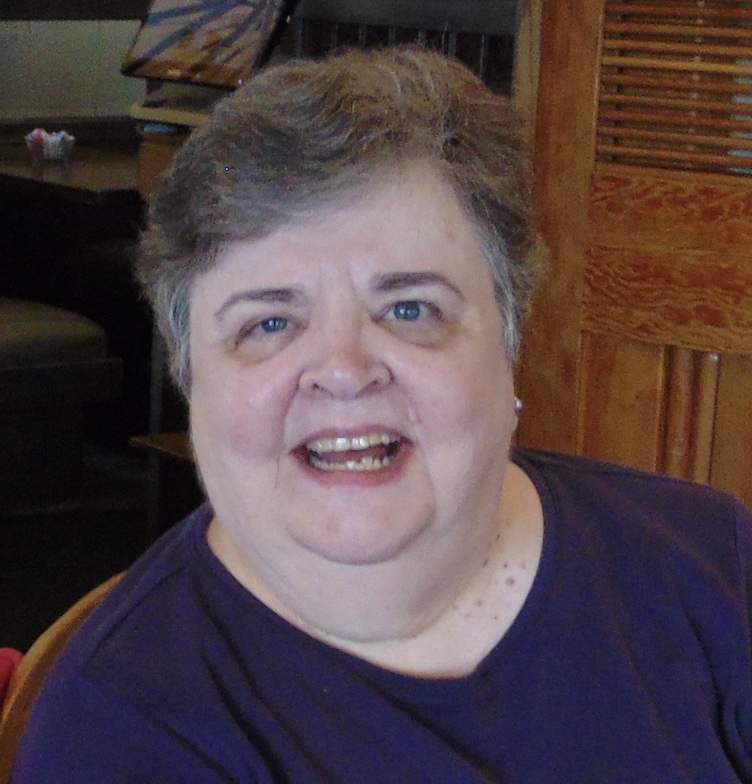
Guest Preacher Mary Denny
June 28, 2026 + Fifth Sunday after Pentecost
At a kairos moment — a hinge in history — the ancient question of discernment becomes urgently present. Preaching on the confrontation between Jeremiah and Hananiah, TLCS member Mary Denny asks how we recognize voices that are trustworthy, truthful, and oriented toward the well-being of the whole human community. The disciples of Jesus faced the same challenge under Roman occupation, and Matthew's counsel remains: look at the fruit. Drawing on Jim Wallis's The False White Gospel, Denny names six texts from the Gospels and Epistles that together form a moral measure for our civic moment, and she calls the congregation to faith-informed advocacy and participation. The coming demographic transformation of America is not only a political reality, she argues, but a spiritual and moral one, a test of whether we truly believe all are made in the image of God. The question "Who is my neighbor?" has never been more consequential.
Sermon Transcript
From YouTube's automatic captions, lightly edited by AI for readability.
Good morning, and peace be with you.
These two short readings are long on challenge concerning prophecy and discipleship. Studying them left me wondering how to know which prophets and which leaders to welcome and to trust. Which voices are truthful, in the biblical sense of reliably furthering God's reign of shalom? That is, in bringing well-being and peace to all our human communities.
If we understand the circumstances behind the conflicting prophecies in the Jeremiah reading, we might find that this 2,600-year-old story resonates with our own circumstances as we struggle to know whom to believe, and whom to trust and follow. The Jeremiah story of the two prophets takes place in the weakened kingdom of Judah, several years after the first siege of Jerusalem by the tyrant from Babylon, Nebuchadnezzar. He has deposed Judah's king and exiled the court and thousands of Judah's warriors and artisans to Babylon. He has confiscated large quantities of Judah's treasure as tribute, but he did not destroy Jerusalem. Nebuchadnezzar appointed another member of the Davidic royal family to the throne and renamed him Zedekiah as a sign of Babylon's forced control over Judah. Today's conflict between the two prophets, about six years after that first surrender, occurs as Zedekiah is developing an alliance with other neighboring principalities who are uncomfortable vassals of Babylon. They plan to move jointly against their conqueror. So just prior to today's reading, in the same chapter, Hananiah, the prophet of King Zedekiah's court, announces publicly in Solomon's temple: "Thus says the Lord of hosts, within two years I will bring back to this place the king and all the exiles from Judah who went to Babylon, for I will break the yoke of the king of Babylon."
In contrast, Jeremiah has been walking around Jerusalem for years, wearing a wooden yoke around his neck and shoulders. Symbolically and verbally, he has repeatedly announced the word of the Lord to the local princes, especially King Zedekiah: "Bring your necks under the yoke of the king of Babylon. Serve him and his people and live. Why should you and your people die by the sword, by famine, and by pestilence, as the Lord has spoken concerning any nation that will not serve the king of Babylon? Do not listen to the words of prophets who are saying to you, 'You shall not serve the king of Babylon,' for they are prophesying a lie to you. I have not sent them to you, says the Lord." Jeremiah understands that it was only the quick surrender of the previous king that allowed Judah and Jerusalem's temple to continue. Any further rebellion puts the weakened state of Judah and the temple at great risk. In today's reading, Jeremiah responds to Hananiah's false prophecy of peace, made in public in the temple. Hananiah has announced his message not in the name of the king whom he serves, but in the name of the Lord of hosts. Still wearing his wooden yoke, Jeremiah responds publicly in the temple: "Yes, Hananiah, we all long for the Lord's deliverance that would return the exiles and the temple treasures to Jerusalem, but your words are against the message of true prophets from ancient times. They repeatedly cautioned about war, famine, pestilence among many countries, and they sought to protect the people from harm. As for your message of peace and well-being, it is a promise often offered by false prophets in difficult times. We cannot know that your message is from the Lord unless the peace comes to pass."
Tragically, seven years after this event, in response to Judah's attempted rebellion, Babylon returned with a second siege that left Judah and the temple in ruins.
The story of Jeremiah's confrontation with Hananiah exemplifies what the New Testament writers repeatedly call a kairos moment. A time that changes the times. A time that can create huge shifts in a moment — shifts that will reverberate for a long time, even for all time. I'm sure you can think of some kairos moments in your own personal history. And surely we will be celebrating a kairos moment in our nation's history this coming Saturday.
Like the people of Judah in Jeremiah's time, we today struggle to get our bearings in our current kairos moment in history. We long to know what is true. We repeatedly seek to identify and support those prophets, civic leaders, and influencers who are trustworthy and reliable, and to follow moral and ethical directions that serve the good of the human community. The disciples of Jesus also lived in uncertain times. They struggled to come to terms with the exploitation and threats of Roman occupation. For them, and for all of us disciples since, the ultimate kairos moment remains the encounter with God in Jesus Christ, the God who pitches a tent among us and who lives with us, full of loving kindness and life-giving truth. In today's reading from Matthew, the disciples have returned from their first mission to the downtrodden of the house of Israel. Jesus closes his instructions to them by mandating the practice of hospitality: toward disciples, toward the righteous, toward little ones, and toward the prophets. From their mission, they experience how precious such hospitality is, especially the abiding welcome when the good news finds a home in the minds and hearts of those who hear it. But as we have seen in Jeremiah, determining what constitutes reliable, life-giving, and truthful prophecy is a challenge. Matthew's best advice is found in chapter 7, similar to Jeremiah's: by their fruits, you shall know them. So we disciples continue to engage in ongoing reflection on the gospel message and daily practice of that message in community, so that we can learn to recognize authentic proclamation of gospel truth.
Last August in Phoenix, the ELCA churchwide assembly sought to clarify gospel counsel on the relationship between our faith and our civic life. The assembly issued a churchwide statement on the issue. As we lovingly celebrate our nation's 250th birthday, the ELCA statement on faith and civic life helps us to get our bearings. Like our honored, if flawed, founders, we are now responsible for our shared future. The statement will help us uplift what is true, life-giving, and reliable in our civil discourse and the needed priorities at all levels of governance. I especially appreciated the ELCA's prophetic statement and analysis on the false patriotism and blatant idolatry of Christian nationalism. If you want to know more, read article 38 in the document.
As we begin our next 250 years, our nation faces a kairos moment that we have not encountered before. By 2040, the white majority will become a minority. We will soon be a country where multiple racial and ethnic minorities will be the majority. This is not just a political crisis. It is a moral and spiritual one. Some powerful people want to prevent the changing demographic in this country from changing the order in our democracy, in order to maintain white minority rule. Controlling who can live here, who is a citizen, and who votes is key to making this happen. The late beloved Senator John Lewis called votes precious and almost sacred, because they allow all God's children to have their voice heard in public life.
In his most recent book, The False White Gospel, Jim Wallis, a Christian advocate for peace and justice for over 50 years, asserts that in this kairos moment, where politics has failed, faith communities can offer a way forward because they are founded on the very equality that makes any diverse human community possible — because all human beings are made in the image of God. Wallis raises the question for us: do we practice politics of the image of God?
He suggests that the times call for renewed attention to what Jesus actually said and what Jesus actually did. His book focuses on six fundamental texts from scripture that are at the heart of what Jesus called us to do. Wallis finds that these texts are in keeping with the best of all our religious traditions. They can also provide moral guidance for those who claim no faith. These texts can serve as guides to help us measure whether what our influencers and civil leaders are proposing actually measures up to bringing life-giving peace and well-being to our human communities. If what is being presented is inconsistent with the values in these texts, extra caution is warranted, as well as some prophetic opposition.
The fundamental texts which Wallis names, along with some challenges:
The first is Luke 10: "You shall love the Lord your God with all your heart, with all your strength, with all your mind, and your neighbor as yourself." And along with it: "Who is my neighbor?" Wallis says this double commandment to love is found in all the Abrahamic traditions, and it will be the test of both faith and democracy in our time. "Who is my neighbor?" will become the primary question for the future of our democracy.
Genesis 1: "Then God said, 'Let us make humankind in our own image according to our likeness.'" Wallis asks: "Will we dehumanize those who are not like us, or will we embrace the image of God in the created, equal humanity of all people?"
John 8: "You will know the truth and the truth will make you free." Will we be faithless and held captive by deliberate and destructive disinformation and loyalty to the lies of false prophets in our day? Or will we be faithful to the truth that Jesus promises can set us free? Will we remain captives to a distorted view of our history that suppresses and denies painful portions concerning vulnerable minorities and women? Or will we attend to hard truths that open paths to the freedom of forgiveness, redemption, repair, and reconciliation?
Matthew 25: "As you have done to the least of these, you have done to me." Will we care for the marginalized and vulnerable, or will we ignore them? Wallis says the economics of Jesus turns our politics upside down.
Matthew 5: "Blessed are the peacemakers, for they shall be called the children of God." Will we accept the endless escalation of violence and war? Or will we pursue peace in our vocation as peacemakers and conflict resolvers?
Galatians 3: "There is no longer Jew or Gentile. There is no longer slave or free. There is no longer male or female. For all of you are one in Christ." Will we seek the unity and diversity of the kingdom of God? Or will we reinforce the social barriers of race, class, gender, and tribalism? The building of new relationships across all boundaries, including religious ones, will become the foundation for the common good in a multi-racial democracy.
Wallis's questions and challenges lead me to ask about us in our own circumstances. How are we individually and as a community practicing faith-informed advocacy and participation in civic life? As I was preparing these remarks last week, I got an email alert from the League of Women Voters requesting that I email the US Postal Service in opposition to the latest proposed policy changes attempting to restrict mail-in voting nationally. I responded.
Today, some of our best Trinity members will travel to Seattle to join the expected 300,000 marchers in the Pride Parade. Last night, Trinity members joined the civic community at the Lynnwood Neighborhood Center in the benefit dinner that paid off the mortgage. Yesterday morning, Trinity volunteers at Neighbors in Need greeted and nourished local people who are homeless. Trinity quilters and prayer shawl makers continue their service of comfort and connection locally and around the world.
Next week we will have another opportunity to support Living Water. In these moments of advocacy and service, may we each know our graced empowerment to further God's reign of shalom in this time and in this place.
In closing, I leave us with one more question: might there be other ways that we could feasibly collaborate as a community in advocacy and participation in our civic life?
Thank you for your kind attention, and the peace of Christ be with you all. Amen.